

Premium Portable Power Station 1500Wh - Arriving Soon
Premium Portable Power Station 1500Wh - Arriving Soon
Product information coming soon
Free express delivery Australia-wide
Couldn't load pickup availability
30-day Returns
Delivery Across Australia
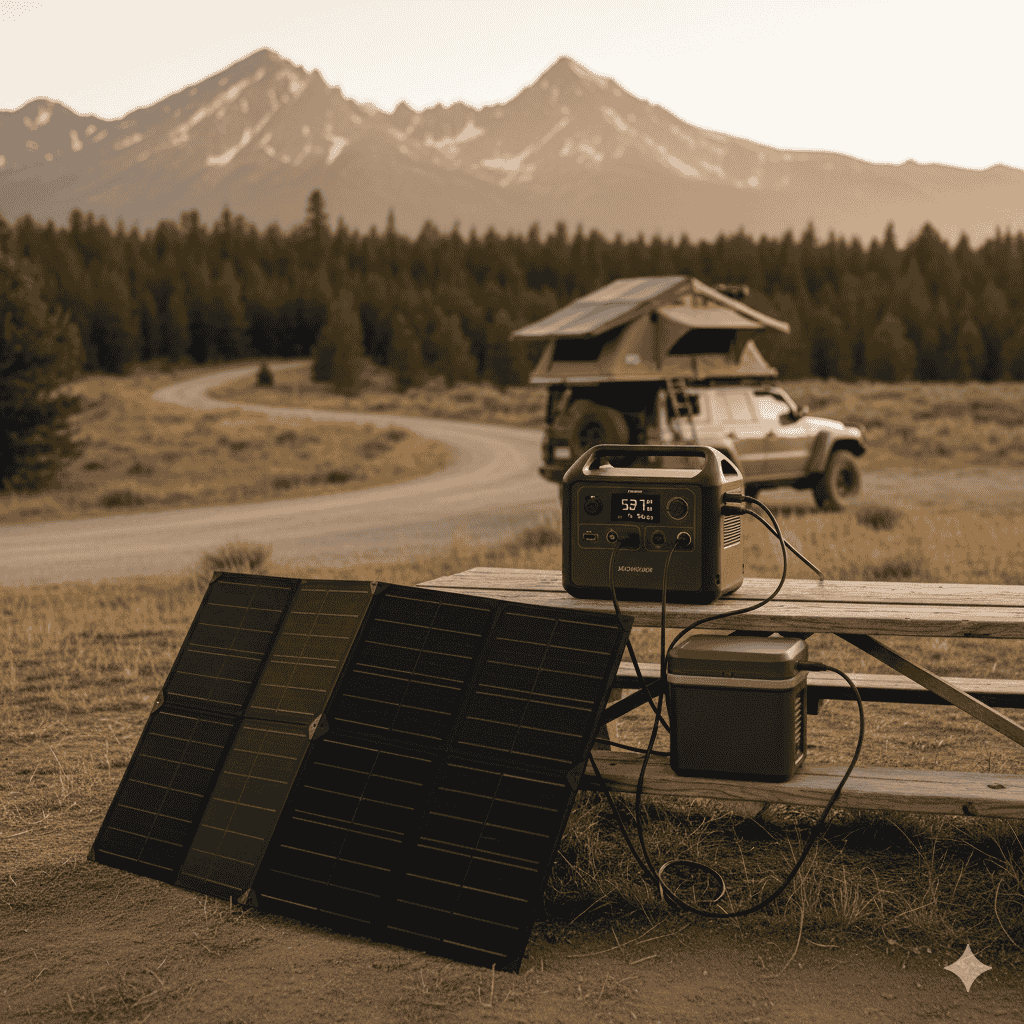
LAUNCHING Q2 2025 - EXAMPLE PRODUCT PRESENTATION
This page demonstrates how Ridgeforge Gear will present portable power stations when we launch. We're currently finalising partnerships with leading battery manufacturers to bring you the most reliable off-grid power solutions available in Australia.
Why 1500Wh Is the Sweet Spot
Too small (500-1000Wh) and you're constantly rationing power on multi-day trips. Too large (2000Wh+) and you're hauling weight and paying for capacity you rarely use. The 1500Wh range sits right in the middle: enough capacity for realistic off-grid needs without being prohibitively heavy or expensive.
Real-World Capacity Explained
Here's what 1500Wh actually powers in Australian camping conditions:
3-4 Day Camping Trip:
- Run a 40L portable fridge continuously: 900-1200Wh (3-4 days)
- Charge laptop daily (3 hours): 195Wh
- Phone charging: 30Wh per day
- LED camp lights (4 hours nightly): 40Wh per day
- Total realistic usage: 1100-1400Wh over 3-4 days
With 200W of solar panels generating 600-800Wh on good days, you're energy neutral or positive. The 1500Wh acts as buffer for cloudy days or higher usage.
Remote Work Setup:
- Laptop (8 hours): 520Wh
- Phone charging: 30Wh
- Portable monitor: 40Wh
- Mobile hotspot or Starlink: 80Wh
- Total daily usage: ~670Wh
Two full days between charges, or indefinite if paired with 200W+ solar panels in decent conditions.
Emergency Home Backup:
- Refrigerator (intermittent): 300-400Wh per day
- LED lighting: 40Wh per day
- Phone/tablet charging: 50Wh per day
- Medical device (CPAP): 160Wh per night
- Total: 550-650Wh per day
2-3 days of essential power, extendable indefinitely with solar charging.
These are real-world estimates based on actual device consumption in Australian conditions, not theoretical calculations that ignore efficiency losses.
LiFePO4: The Battery Technology That Matters
Not all batteries are created equal. The 1500Wh capacity means nothing if the battery degrades after one year. This is why we'll only stock LiFePO4 (Lithium Iron Phosphate) power stations.
Actual Output That Works
1800W continuous AC output handles most camping and home devices:
- Portable fridges (50-60W): Easy
- Laptops (45-100W): Multiple simultaneous charging
- Camera/drone batteries (60-100W): No problem
- Power tools up to 1800W: Supported
- Medical devices (CPAP, nebulisers): Reliable overnight operation
- Small kitchen appliances: Kettle, toaster (check wattage)
3600W surge capacity handles startup requirements. Fridges, fans, and motors draw extra power when starting. The surge capacity means these devices start without shutting down your power station.
Most camping failures happen because people don't account for surge requirements. A fridge rated 60W might draw 200W on startup. Quality power stations handle this; budget models shut down.
Output Versatility Matters
2x AC outlets (240V standard Australian socket) 4x USB-A ports (5V/2.4A for phones, tablets, cameras) 2x USB-C PD ports (100W max for fast charging laptops) 1x 12V car socket (10A for 12V devices) 1x Anderson connector (Direct DC for high-efficiency devices)
This variety eliminates adapter juggling. Everything connects directly. You're not choosing which devices to charge or buying multiple adapters.
The USB-C PD ports deserve specific mention: 100W output charges modern laptops at full speed. This wasn't standard on older power stations. It matters significantly for remote work where your laptop is your livelihood.
Solar Charging That Actually Works
Maximum solar input: 500W
This isn't theoretical capability. It's the actual rate quality power stations accept from solar panels. With 300W of solar panels in good Australian conditions:
- Full recharge in 5-6 hours direct sun
- Partial recharge (500Wh) in 2 hours
- Enough daily generation to offset typical usage
With 200W of solar panels (more realistic for most people):
- Full recharge in 7-9 hours good sun
- Daily generation of 600-800Wh average
- Offsets typical camping usage (fridge + devices)
The built-in MPPT (Maximum Power Point Tracking) charge controller maximizes efficiency from your panels. This extracts every available watt even in suboptimal conditions like partial shade or morning/evening sun.
Other charging methods:
- AC wall charging: 1.5 hours to full (1000W fast charger)
- 12V car charging: 8-10 hours while driving
- Dual charging: Solar + car simultaneously for fastest recharge
The 1.5 hour AC charging deserves emphasis. If you stop for lunch at a cafe with power, you can top up 60-70% in an hour. This flexibility extends your off-grid capability significantly.
Real-World Use Cases
Weekend Camping (2-3 days):
- Fridge running continuously: 720-1080Wh
- Laptop use (4 hours/day): 260Wh total
- Phone charging: 60Wh total
- Camp lights (4 hours/night): 80Wh total
- Total consumption: 1100-1300Wh
Within capacity with no solar, or indefinite with 200W solar supplementation.
Week-Long Remote Trip:
- Fridge: 2520Wh over 7 days
- Laptop (3 hours/day): 1365Wh
- Phones/devices: 210Wh
- Lights: 280Wh
- Total: 4375Wh over 7 days
Requires solar charging. With 200W panels generating 600-800Wh daily average, you're energy positive. The 1500Wh provides buffer for consecutive cloudy days.
Emergency Home Backup:
- Essential refrigeration: 400Wh/day
- LED lighting: 80Wh/day
- Phone/device charging: 60Wh/day
- Medical device: 160Wh/night
- Total: 700Wh/day
2 days without recharging, indefinite with solar panels or periodic AC recharging when power returns.
Build Quality and Portability
Weight: 17kg - Manageable for most people with integrated carrying handles Dimensions: Approximately 35 x 25 x 28cm (fits in most vehicle storage areas) Casing: Impact-resistant ABS with rubber corner protection Display: Clear LCD showing input/output watts, battery percentage, estimated runtime Cooling: Intelligent fan that runs only when needed (quiet operation)
At 17kg, this isn't ultralight backpacking gear. It's robust equipment designed for vehicle-based camping. The weight reflects the battery capacity and build quality. Quality 1500Wh power stations weigh 16-19kg. Anything significantly lighter either has less capacity than claimed or uses inferior components.
The integrated handles make carrying manageable. Lifting 17kg from ground to vehicle cargo area is reasonable for most adults. Moving it around camp is straightforward.
Safety and Protection Systems
Quality power stations include comprehensive Battery Management Systems (BMS) that protect against:
- Overcharge protection: Prevents battery damage from excessive charging
- Over-discharge protection: Stops discharge before battery damage occurs
- Short circuit protection: Automatically cuts power if short detected
- Overload protection: Shuts down if draw exceeds safe limits
- Temperature protection: Won't charge or discharge outside safe temperature range
- Cell balancing: Ensures all battery cells maintain equal charge for longevity
These protections work invisibly but critically. They're why quality power stations last 10+ years while budget models fail in 2-3 years. The BMS protects your investment and ensures safe operation.
What's Actually Included
Typical quality 1500Wh power station packages include:
- Power station unit with LiFePO4 battery
- AC fast charger (1000W, wall charging)
- 12V car charging cable
- MC4 to Anderson solar cable (for solar panel connection)
- Comprehensive user manual with specifications
- Manufacturer warranty (typically 3-5 years)
Some brands include carrying case, additional cables, or accessory pouches. We'll clarify exactly what's included with each model we stock.
Not Just Emergency Gear
Many people buy power stations "just in case" and they sit unused. Quality 1500Wh stations are different - they're gear you'll actually use:
- Every camping trip (worth the investment after 10-15 trips)
- Remote work from anywhere
- Outdoor events and gatherings
- Workshop/garage power for cordless tool charging
- Kids' outdoor activities requiring power
- Yes, also emergency backup when power goes out
Equipment that sees regular use is equipment worth owning. A 1500Wh power station becomes part of your adventure infrastructure, not a single-purpose emergency item collecting dust.
Comparing to Generators
Traditional generators have their place, but power stations offer distinct advantages for camping:
Power Stations Win On:
- Silence (no engine noise)
- No fuel required or stored
- Indoor safe operation
- Instant power (no starting)
- Maintenance-free operation
- Clean power safe for sensitive electronics
- Lighter weight for equivalent usable power
Generators Win On:
- Unlimited runtime (as long as you have fuel)
- Higher continuous output (3000W+ common)
- Lower cost per watt-hour
- Established repair infrastructure
For most camping scenarios under 7 days, power stations with solar make more sense. For extended off-grid living or running high-draw appliances continuously, generators may be necessary.
Solar Panel Pairing
For a 1500Wh power station, ideal solar setup:
Minimum: 200W portable panels
- Provides 600-800Wh daily average
- Offsets typical camping usage
- Extends station life indefinitely in good weather
Recommended: 300-400W portable panels
- Provides 900-1200Wh daily average
- Full recharge in 5-6 hours good sun
- Covers higher usage scenarios
Maximum: 500W (station's input limit)
- Full recharge in 4-5 hours
- Maximum flexibility
- Overkill for many users but future-proofs setup
We'll provide matched solar recommendations for every power station we stock, with realistic output expectations for Australian conditions.
Who This Capacity Suits
Perfect for:
- 3-5 day camping trips without charging
- Remote workers needing reliable power
- Couples or small families camping regularly
- Van lifers with moderate power needs
- Emergency preparedness (2-3 day backup)
- Anyone wanting serious capacity without massive weight
Consider smaller (500-1000Wh) if:
- Weekend camping only (1-2 nights)
- Minimal devices (phone + lights only)
- Budget is primary concern
- Maximum portability required
Consider larger (2000Wh+) if:
- Week+ trips completely off-grid
- Van life with high power consumption
- Running multiple high-draw appliances
- Extended emergency backup requirement
We'll help you right-size your power station when we launch. Honest capacity assessment saves money and prevents disappointment.
The Ridgeforge Difference
You'll receive:
- Honest capacity calculations matched to your specific needs
- Solar panel recommendations based on your usage patterns
- Usage optimisation tips for maximum runtime
- Australian warranty support - no dealing with overseas RMA processes
- 30-day satisfaction guarantee - if it's not right, we'll make it right
We won't sell you a 1500Wh station if 1000Wh actually meets your needs. We'd rather save you money and earn long-term trust than maximise every sale.
Join Our Launch
We're finalising partnerships with leading power station manufacturers now. Join our waitlist for:
- Early access notification when we launch
- Detailed product specifications and brand comparisons
- Power consumption calculators and solar sizing tools
- Launch pricing (waitlist members receive priority pricing)
- Direct answers to capacity questions specific to your needs
No payment or commitment required. Just early access to information and launch notification.
| Feature | Ridgeforge Curated Standard |
| Battery Type | LiFePO4 (Lithium Iron Phosphate) |
| Capacity | 1500Wh nominal / ~1275Wh usable (85% efficiency) |
| Cycle Life | 3000-4000+ cycles to 80% capacity |
| Expected Lifespan | 8-10+ years with regular use |
| AC Output | |
| - Continuous | 1800W |
| - Surge | 3600W |
| - Outlets | 2x 240V Australian standard |
| - Waveform | Pure sine wave (safe for all electronics) |
| DC Output | |
| - USB-A | 4 ports, 5V/2.4A each (48W total) |
| - USB-C PD | 2 ports, 100W max each (200W total) |
| - 12V Car Socket | 1 port, 10A max (120W) |
| Dimensions | ~35 x 25 x 28cm |
| Weight | ~17kg |
| Operating Temp | -10°C to 40°C |
| Storage Temp | -20°C to 60°C |
Specifications are representative of quality 1500Wh LiFePO4 power stations. Exact specifications will vary by brand and model.
Frequent Asked Questions
How long will a 1500Wh power station actually run my devices?
The honest answer: it depends entirely on what you're running and how efficiently you use it. Here's the calculation:
Device wattage × hours used = watt-hours consumed
Then account for ~85% efficiency (1500Wh station = ~1275Wh usable power).
Real examples:
40L Portable Fridge (50W running, 60W peak):
- Runs 50% duty cycle (on 30 min/hour due to thermostat cycling)
- Actual consumption: 25W average
- Runtime: 1275Wh ÷ 25W = 51 hours (2+ days continuous)
Laptop (65W charger):
- Actually draws 45-55W when charging, less when just running
- Average 50W when in use
- Runtime: 1275Wh ÷ 50W = 25 hours of active use
Smartphone (20W fast charging):
- 0.015kWh per full charge typical
- Number of charges: 1275Wh ÷ 15Wh = 85 full charges
LED Camp Lights (10W total):
- Runtime: 1275Wh ÷ 10W = 127 hours
Combined realistic camping scenario:
- Fridge (25W average): 600Wh over 24 hours
- Laptop (3 hours): 150Wh
- 2x phones charged: 30Wh
- Lights (4 hours): 40Wh
- Total daily: 820Wh = 36 hours runtime, plus recharging time
With 200W solar generating 600-800Wh daily, you're nearly energy neutral.
The key is measuring actual consumption, not just reading device labels. Devices rarely draw maximum rated power continuously.
What's the difference between LiFePO4 and regular lithium-ion batteries?
This is the single most important specification to understand:
LiFePO4 (Lithium Iron Phosphate):
- Cycle life: 3000-4000+ cycles to 80% capacity
- Lifespan: 8-10 years regular use, 10-15+ years light use
- Safety: Very stable chemistry, low thermal runaway risk
- Temperature: Handles heat well (important for Australian conditions)
- Cost: Higher upfront, lower long-term
Standard Lithium-Ion (NMC/NCM):
- Cycle life: 800-1000 cycles to 80% capacity
- Lifespan: 3-5 years typical
- Safety: Generally safe but higher risk than LiFePO4
- Temperature: More sensitive to heat exposure
- Cost: Lower upfront, higher long-term (needs replacement sooner)
Real-world impact:
If you use your power station once per week (52 cycles/year):
- LiFePO4: Maintains 80% capacity for 57+ years (essentially lifetime)
- Standard lithium: Maintains 80% capacity for 15-19 years
If you use it daily (365 cycles/year):
- LiFePO4: Maintains 80% capacity for 8-11 years
- Standard lithium: Maintains 80% capacity for 2-3 years
For camping gear that might sit in a hot vehicle in Australian summer, LiFePO4's temperature stability matters significantly. Standard lithium degrades faster when exposed to 40-50°C conditions repeatedly.
Our commitment: We'll only stock LiFePO4 power stations. The upfront cost difference ($200-400 typically) is worth the longevity and safety benefits.
Can I charge and use it simultaneously (pass-through charging)?
Yes, quality power stations support pass-through charging. This means you can charge the power station while simultaneously running devices from it.
Why this matters:
Scenario 1: You're at a cafe with wall power for an hour. Plug in the power station to charge while your laptop draws power from it. The station charges AND powers your laptop simultaneously.
Scenario 2: You're driving and charging via 12V car outlet while your fridge draws power from the station. The station charges from the car while powering the fridge.
Scenario 3: Solar panels are charging the station during the day while your devices draw power. The station balances incoming solar and outgoing device power automatically.
Important limitation: The charge rate slows when devices draw power simultaneously. If your station charges at 1000W but you're drawing 500W for devices, net charge rate is only 500W. This doubles charging time from 1.5 hours to 3 hours.
For maximum charge speed, minimise device usage during charging. But pass-through capability provides flexibility when you can't wait.
How do I calculate what size power station I actually need?
Follow this process to right-size your power station:
Step 1: List every device you'll power
- Portable fridge: 50W
- Laptop: 65W
- 2x phones: 10W each
- LED lights: 10W
- Camera battery charging: 10W
Step 2: Calculate hours used per day
- Fridge: 24 hours (but 50% duty cycle = 12 hours actual run time)
- Laptop: 4 hours
- Phones: 2 hours total charging
- Lights: 4 hours
- Camera: 1 hour
Step 3: Calculate daily watt-hours
- Fridge: 50W × 12 hours = 600Wh
- Laptop: 65W × 4 hours = 260Wh
- Phones: 20W × 2 hours = 40Wh
- Lights: 10W × 4 hours = 40Wh
- Camera: 10W × 1 hour = 10Wh
- Total daily consumption: 950Wh
Step 4: Add 20-30% buffer for efficiency losses and unexpected usage
- 950Wh × 1.25 = 1187Wh minimum
Step 5: Consider days between recharging
- For 2 days: 1187Wh × 2 = 2374Wh needed
- For 3 days: 1187Wh × 3 = 3561Wh needed
Conclusion: For this usage pattern:
- 1-2 days without charging: 1500Wh station works
- 3+ days without charging: Need 2000Wh+ or add solar panels
With solar panels:
- 200W panels generating 600-800Wh daily
- Net consumption: 950Wh - 700Wh = 250Wh daily deficit
- 1500Wh station lasts 6 days before depletion
We'll provide calculation worksheets and direct support to help you size correctly when we launch.
What happens if I exceed the 1800W output limit?
Quality power stations have multiple protection layers:
Scenario 1: Continuous overload (drawing 1900W constantly)
- BMS detects overload immediately
- Audible alarm sounds (usually beeping)
- Display shows overload warning
- After 5-10 seconds, power shuts off automatically
- Must disconnect overloading device to restart
Scenario 2: Brief surge (device needs 2000W to start, then drops to 1500W)
- If under 3600W surge limit: Station handles it, no issues
- If over 3600W surge: Same protection as continuous overload
Damage prevention:
- No damage occurs to the power station
- BMS protects battery and circuits
- Immediately resume normal use after removing overload
Prevention:
- Know your device wattages before plugging in
- Don't run multiple high-draw devices simultaneously
- Account for surge requirements (motors need 2-3× normal watts to start)
Common mistake: Running electric kettle (2000W) and hair dryer (1800W) simultaneously. Total 3800W exceeds capacity. Run them sequentially instead.
The overload protection is a feature, not a flaw. It prevents battery damage and ensures longevity.
How does cold weather affect performance?
LiFePO4 batteries handle cold better than you might expect, but they have limitations:
Temperature impacts:
0°C to 10°C: Normal operation, capacity slightly reduced (5-10%)
- Discharging: No issues, runs devices normally
- Charging: Slower charge rates recommended
-10°C to 0°C: Reduced capacity (10-20%), slower charging
- Discharging: Still functional but runtime shortened
- Charging: Very slow or disabled by BMS to protect battery
Below -10°C: Significantly reduced capacity (20-30%)
- Discharging: Reduced output capability
- Charging: Usually disabled by BMS (battery damage risk)
Practical advice for cold camping:
Storage overnight:
- Keep power station inside sleeping area or vehicle if possible
- Body heat or vehicle interior keeps it 10-15°C warmer than outside
- Insulated bag or blanket helps maintain temperature
Charging in cold:
- Let power station warm up before charging in freezing conditions
- Solar charging works if panel faces sun (even if air is cold)
- Car charging while driving (alternator and engine heat helps)
Usage strategy:
- Power station performs better when slightly warm from use
- Running high-draw devices generates internal heat
- This can actually improve cold weather performance
Bottom line: LiFePO4 handles cold significantly better than standard lithium. You can camp in 0-5°C conditions with minimal impact. Below freezing requires more care but is still manageable.
What maintenance does a power station require?
Power stations are remarkably low-maintenance compared to generators, but some care ensures longevity:
After every trip:
- Wipe down exterior (dust, dirt, moisture)
- Check all ports are clean and dry
- Ensure fan vents are clear
- Verify display functions correctly
Every 3 months (or before extended trips):
- Fully charge if stored long-term
- Check charge/discharge cycle (run it down 50%, recharge to 100%)
- Inspect cables for wear or damage
- Test all outputs briefly
Every 6 months:
- Deep cleaning of fan vents (compressed air)
- Firmware update check (if app-enabled model)
- Full discharge/recharge cycle
- Inspect for any physical damage or wear
Long-term storage (30+ days unused):
- Store at 50-70% charge (not full, not empty)
- Cool, dry location
- Check and recharge every 3-6 months
- Avoid extreme temperature storage locations
What NOT to do:
- ❌ Store fully discharged for months (damages battery)
- ❌ Store in direct sun or extreme heat (degrades battery)
- ❌ Leave unused for 12+ months without recharging
- ❌ Expose to moisture or rain (not waterproof)
- ❌ Drop or impact hard (damages internal components)
Realistically: Most users simply keep their power station charged, use it regularly, and wipe it down occasionally. This is sufficient for 8-10+ years of reliable service with LiFePO4 batteries.
Can I expand capacity with additional batteries?
This depends entirely on the specific brand and model:
Expandable models:
- Support additional battery packs that connect to main unit
- Can double, triple, or more the capacity
- Battery packs communicate with main unit
- Typically same brand compatibility only
Non-expandable models:
- Fixed capacity, no expansion possible
- Usually lighter and more portable
- Simpler system, fewer connection points
Our approach when we launch:
We'll clearly indicate which models support expansion. For most users, we recommend:
- Start with right-sized capacity (don't under-buy assuming you'll expand)
- Expansion is expensive (often $800-1500 per additional battery)
- Most people don't actually expand after initial purchase
- Better to buy correct capacity initially
Exception: Van lifers or off-grid living situations may benefit from expandable systems. If you know you'll need 3000-5000Wh eventually, starting with expandable 1500Wh and adding capacity later can spread the cost.
For camping use, a single 1500Wh unit with 200-400W solar covers most scenarios without expansion.
WHAT'S INCLUDED (TYPICAL)
When we launch with 1500Wh portable power stations, typical packages include:
- ✓ Complete power station with LiFePO4 battery
- ✓ AC fast charger (1000W, wall charging)
- ✓ 12V car charging cable
- ✓ MC4 to Anderson solar cable (for solar panel connection)
- ✓ Comprehensive user manual with detailed specifications
- ✓ Manufacturer warranty (typically 3-5 years)
Additional accessories often available:
- Solar panels matched to station capacity (sold separately)
- Carrying case or protective cover
- Extended warranty options
- Additional charging cables
- Expansion batteries (model dependent)